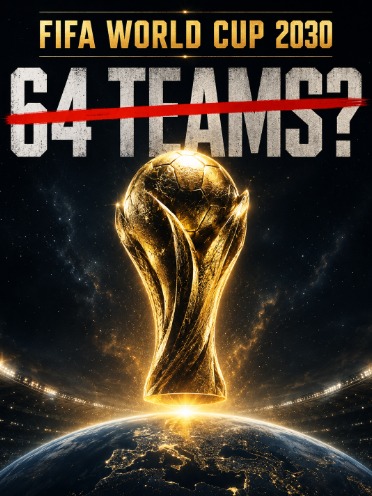
The FIFA World Cup may be about to undergo its biggest change ever. The current FIFA World Cup will be the last one with just 48 teams before the organisation looks at a plan for the next edition to include 64 teams, FIFA President Gianni Infantino has said. The transfer would add 16 more countries to the biggest pitch in football.
Infantino favors the idea of a larger competition to make the World Cup truly global by providing more opportunities for emerging football powers. There is a possibility that a 64-team World Cup would allow more countries in Africa, Asia, the Caribbean, and Oceania to have a fair chance of qualifying for the big boys’ club instead of the European and South American giants dominating the tournament.
More countries are already able to compete thanks to the increased number of teams (48) for the 2026 FIFA World Cup. Infantino said that the quality of the performances of the emerging teams shows that more access leads to a higher level of motivation of national associations in the development of academies, coaching, infrastructure, and organizing national competitions.
But the proposal is sure to be a big issue in world football. A tournament of 64 teams would most likely include 16 groups of four teams and would yield about 128 games. While it would raise the excitement, there would be extra strain on players, clubs, host cities, and supporters as well, but it might also bring extra revenue. There might be a case for saying that the qualification campaigns might become diluted if they continue to be extended, and the final becomes less of an honor.
The 2030 FIFA World Cup is already going to be a historic event. Most of the competition will go on at the venues of Morocco, Portugal, and Spain, while Argentina, Paraguay, and Uruguay will play special centenary matches commemorating 100 years of the first World Cup. The tournament would be the largest international football tournament ever held if it went to 64 teams.
FIFA hasn’t officially confirmed the expansion at this time. Post-2026, the sporting, commercial, and logistical implications will be discussed. But Infantino’s remarks have paved the way for a revolution in football, and the debate over bigger is better is finally on.